What Is a Subarachnoid Haemorrhage (SAH)?
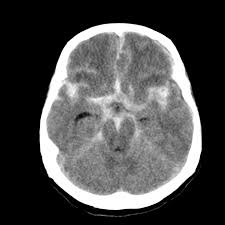
A subarachnoid haemorrhage is a type of brain bleed that occurs in the space between two layers covering the brain, called the subarachnoid space. Instead of forming one large clot, the blood often spreads as a thin layer over the surface of the brain, although larger clots can sometimes form.
Subarachnoid haemorrhage is a serious medical emergency and requires urgent hospital care.
What Causes a SAH?
A subarachnoid haemorrhage can be caused by a head injury (trauma), but it can also occur without any injury, which is called spontaneous subarachnoid haemorrhage. This section focuses on spontaneous causes.
Brain Aneurysms
The most common cause of spontaneous subarachnoid haemorrhage is rupture of a brain aneurysm.
An aneurysm is a weak area in the wall of a blood vessel that can slowly bulge and eventually burst, causing bleeding.
Risk factors for aneurysms include:
Smoking
High blood pressure
Family history of aneurysms
Certain inherited or medical conditions
Arteriovenous Malformations (AVMs)
An arteriovenous malformation (AVM) is an abnormal connection between arteries and veins. AVMs can occur in the brain and may rupture, leading to a subarachnoid haemorrhage.
Unknown Cause
In some patients, no clear cause is found despite detailed tests. These patients often recover well and usually do not have further problems once discharged.
How is SAH Diagnosed?
Many patients describe a sudden, very severe headache, often called a “thunderclap headache”. Other symptoms may include:
Nausea or vomiting
Neck stiffness
Sensitivity to light
Confusion or agitation
Loss of consciousness
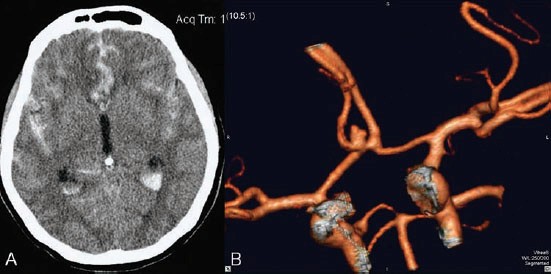
A CT scan of the head is usually the first test and often shows the bleeding.
If the CT scan is normal but suspicion remains high, a lumbar puncture may be performed to check for blood in the spinal fluid.
If bleeding is confirmed, further scans are needed to find the cause:
CT angiogram – a CT scan with contrast dye to look at blood vessels
Catheter angiogram – a detailed test where a thin tube is passed from the groin into the blood vessels of the brain to look for aneurysms or AVMs
How Is Subarachnoid Haemorrhage Treated?
In most cases, the bleeding has already stopped by the time the patient reaches hospital. Early treatment focuses on close monitoring and supportive care while the brain recovers.
If the haemorrhage is caused by an aneurysm, there is a high risk of re-bleeding, so treatment aims to secure the aneurysm to prevent further bleeding.
There are two main treatment options: coiling and clipping.
Coiling
Coiling is a minimally invasive procedure performed by specialist radiology doctors.
The patient is put to sleep
A small tube is passed from the groin up into the blood vessels of the brain
Tiny metal coils are placed inside the aneurysm
This blocks blood flow into the aneurysm and prevents re-bleeding
Clipping
Clipping is a surgical procedure performed by neurosurgeons to treat a brain aneurysm.
The operation is carried out under general anaesthesia. During the procedure:
A small area of hair is shaved and an incision is made in the scalp
A section of the skull is temporarily opened (craniotomy)
The surgeon carefully locates the aneurysm
A small metal clip is placed across the aneurysm to stop blood from entering it
This permanently seals the aneurysm and prevents further bleeding.
What is the outlook?
A subarachnoid haemorrhage is a very serious condition, and recovery can vary widely. Some patients recover well, while others may have significant complications. It is not always possible to predict how an individual patient will do.
Many factors affect recovery, including:
The cause of the bleeding
How severe the initial bleed was
The patient’s overall health
At NNRC, the neurosurgical and critical care teams are experienced in managing subarachnoid haemorrhage and its complications.
Support and Information
Patients and families are supported by a multidisciplinary team, including doctors, nurses, and specialist staff experienced in neurovascular conditions. Ongoing support and clear communication are an important part of care throughout treatment and recovery.
Potential Complications
Because the brain controls many body functions, a subarachnoid haemorrhage can affect different parts of the body.
One common complication is vasospasm, where blood vessels supplying the brain narrow after being irritated by blood. This can lead to:
Worsening confusion or drowsiness
New weakness or speech problems
Stroke-like symptoms
Vasospasm can be treated using medications and, in some cases, specialist procedures.
Most patients with subarachnoid haemorrhage are initially cared for in the intensive care unit (ICU) or high dependency unit (HDU) so they can be closely monitored and treated promptly if complications arise.